

Cavemen brains vs psychology PhDs… who will win?
As of January 2026, there were 5.66 billion social media users, with China, India and the US being the three largest markets. So 64% of the global population uses social media. Although young people were the early adopters of socials and have since continued to use the sites the most out of any age group, the use by older adults have been on the rise, particularly those in the 50+ group.
Social media “works” because it’s based on our inherent need to connect with others, see how they’re doing, and how we’re doing compared to them. That’s the initial allure anyway. Your intentions for creating a social media account might be as innocent as catching up on your friends’ travel posts, or watching a cute cat video. But used unconsciously, it’s easy to get sucked into a reward loop.
What is it that draws us into our devices?
One explanation can be found in our habits, or more precisely, how technology wiggles its way into our daily life.
One moment, we’re sleeping, the next, the all-too-familiar sound of your phone alarm starts blasting. You grab your phone to check notifications as you walk towards the bathroom. Brushing your teeth takes ages, like 2-3 minutes, which is 5-20 Instagram stories worth of time. You’ve already tweeted by the time you’ve had breakfast. And so on.
Bit by bit, these small increments of time spent on social media begin to add up, and you build habits around phone use. Habits are behaviors that are done automatically, with hardly any thought, like making a cup of coffee in the morning. By repeating the behavior of checking TikTok or Instagram while eating breakfast every day, even for a couple minutes a time, you’re slowly teaching your brain that these two actions go together. Soon enough, the act of checking Instagram during these times becomes intuitive, unconscious… in other words, a habit.
This isn’t to say that having social media-related habits is purely a bad thing. In fact, establishing healthy online habits is the key to making the most out of these platforms. However, it’s easy to lose control of one’s habits, and therefore it is important for the use of social media to remain conscious and purposeful.
How exactly do we get ‘hooked’?
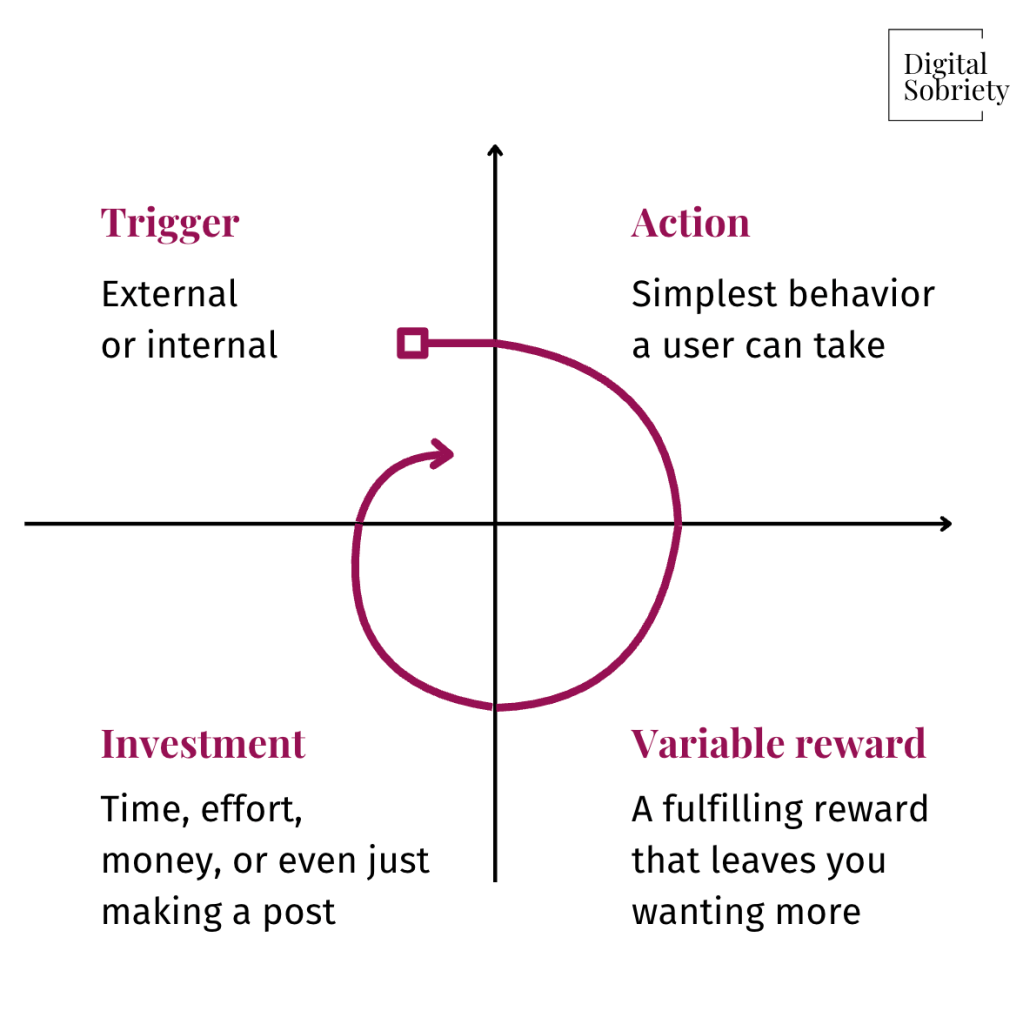
Nir Eyal, the author of Hooked: How to Build Habit-Forming Products, divides the process of getting ‘hooked’ on (tech) products into four phases:
- Trigger: Something that prompts you to click. It can be either external (big button, notification, advertisement, recommendation from a friend) or internal (associating an app with an emotion).
- Action: What the trigger wants you to do. For example, creating an account or making a post.
- Variable reward: which creates intrigue and craving for more. Each scroll might bring something better, and every refresh creates anticipation for a new notification.
- Investment: oftentimes in the form of having the app icon on your home screen, or a literal time/money investment into the platform.
Anticipation is the key
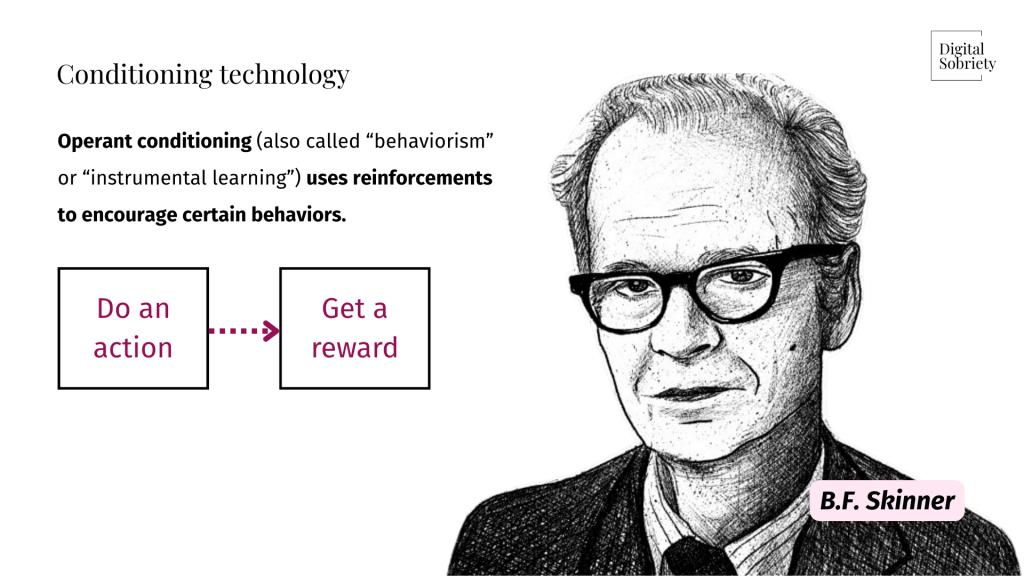
An interesting point that I’d like to address is the fact that it’s not the reward itself that gets our still tech-unadapted brains to light up. It’s the anticipation of reward, or rather, the uncertainty of receiving it. This is an extension on Skinner’s theory on operant conditioning, which states that reinforcements can be used to encourage certain behaviors — and researchers found that reinforcements are most effective when they’re unpredictable.
Social media takes advantage of our constant search for novelty, by leveraging dopamine loops. Humans are astoundingly good at imagining things and experiences, and we are thoroughly impacted by those expectations. When we look at something that we’d like to have, we start imagining how we’ll feel once we get it. Every time we refresh the notifications, we are led by a certain hope of reward in the form of a like or reply. It’s very similar to the feeling you have when you’re about to pay for a new piece of clothing or tech you’ve wanted for a while.
Another example is the spark gamblers feel as they pull the slot machine, expecting a big payoff. This principle is often used in modern gaming to boost engagement:
The path to hell is paved in good intentions
Social media and tech in general are focused on creating a smooth user experience. A simple and satisfying interface design goes a long way in keeping the users coming back.
The rhythmic element of scrolling through TikTok is almost hypnotic, and it’s very easy to lose the track of time. Reducing the number of steps the user has to take is crucial for engagement. Twitter’s 140 character limit was what made it famous. It made posting easy. Writing a regular blog takes time and effort, but anyone can write up a few sentences and click ‘Tweet’.
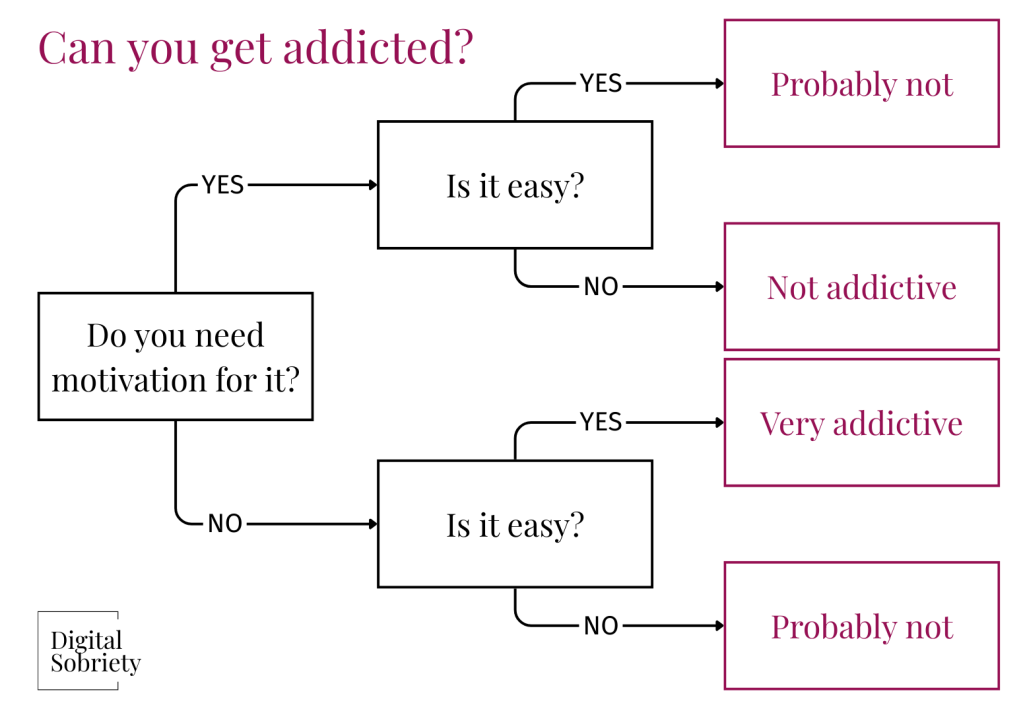
Here’s my very non-technical diagram for how addictive a tech piece may be:
Bottom line
The key takeaway from this would be that we should make our use of technology conscious, and to remind ourselves that these platforms are free because they are paid for in our time, attention, energy and personal data. I also strongly recommend you read Hooked by Nir Eyal. Even though I have bones to pick with the general idea of a step-by-step guide on how to create ‘habit-forming’ products, which this book is, I still believe it’s a worthy read. Knowing the science behind how such products are created can show us how to break free from their grip.


Leave a Reply